How to Choose a Professional Hair Transplant for Women Today

Hair restoration for women requires a fundamentally different approach than for men. Female hair loss is often diffuse meaning it occurs across the entire scalp rather than in the concentrated patterns (like a receding hairline) seen in males. This makes the selection of a specialist and the choice of technique critical for success.
In 2026, the industry has moved toward more discrete, non-shaven techniques and “hybrid” approaches that combine surgery with non-invasive camouflaging, such as scalp micropigmentation. Here is how to choose the right professional and the best restoration path for your needs.
1. Determine Your Candidacy
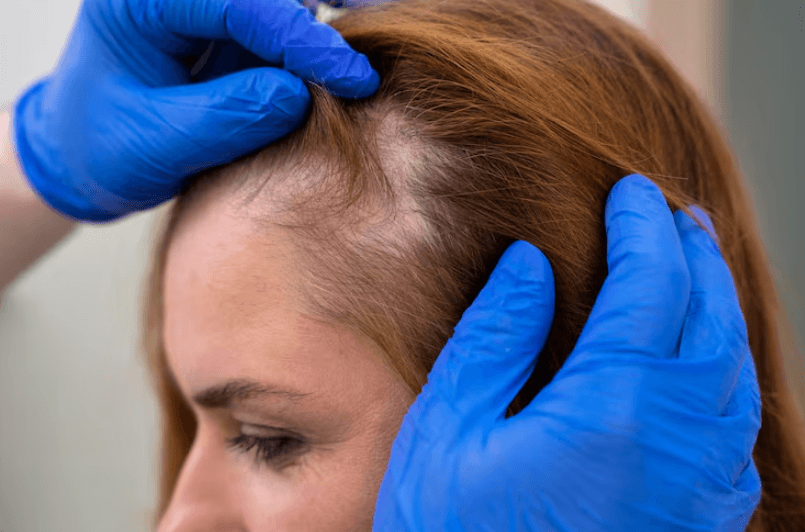
Unlike men, only a smaller percentage of women are ideal candidates for surgical hair restoration. A professional specialist should first identify the cause of your thinning.
- Ideal Candidates: Women with Traction Alopecia (hair loss from tight styles), hair loss due to trauma/scars, or a distinct “male-pattern” recession with a stable donor area at the back of the head.
- Diffuse Thinning: If your hair is thinning everywhere (including the sides and back), a transplant may not be successful because the “donor” hair is just as vulnerable to thinning as the hair being replaced. In these cases, a specialist may recommend medical therapies or scalp micropigmentation instead.
2. Prioritize “Unshaven” and “Long-Hair” FUE
One of the greatest deterrents for women is the fear of having to shave their heads for the procedure. Modern clinics now offer specialized techniques designed for female privacy and styling.
- Long-Hair FUE: This advanced technique allows the surgeon to extract and transplant hairs without trimming them. This means you can see the immediate aesthetic result, and the procedure is virtually undetectable from day one.
- DHI (Direct Hair Implantation): Often preferred for women, this method uses a “Choi pen” to implant follicles directly into the thinning area without pre-making incisions. This allows for higher density and more precise control over the angle of growth, which is essential for a natural feminine hairline.
3. The Role of Scalp Micropigmentation (SMP)
For many women, the goal isn’t just more hair, but the illusion of more density. Scalp micropigmentation is a medical-grade “tattooing” technique that uses micro-dots of pigment to mimic hair follicles.
- Reducing Contrast: SMP is highly effective for women with diffuse thinning. By darkening the scalp to match your natural hair color, it reduces the “white” contrast of the scalp peeking through, instantly making the hair look twice as thick.
- Post-Transplant Synergy: SMP can also be used to “fill in” areas after a transplant or to camouflage a linear scar if an older (FUT) method was used.
- Discretion: Unlike a transplant, SMP provides immediate visual results with zero surgical downtime.
4. Evaluate the Clinic’s “Feminine” Portfolio
A surgeon who excels at masculine hairlines may not have the eye for the soft, multi-directional flow of a woman’s hairline.
- Artistic Design: A female hairline is typically lower and more rounded, with fine “baby hairs” at the front. Ask to see “before and after” photos specifically of female patients.
- Diagnostic Tools: A professional clinic should use high-magnification trichoscopy to measure your donor density and ensure you aren’t suffering from an underlying inflammatory condition (like Frontal Fibrosing Alopecia) that would cause a transplant to fail.
See also: Secure Login Systems for Apps
5. Integrating Regenerative Medicine
In 2026, professional hair restoration is rarely just about surgery. To ensure the transplanted grafts survive and the surrounding hair stays strong, specialists often integrate regenerative therapies.
- Exosome Therapy: This is a cutting-edge, non-surgical treatment that uses signaling molecules to “wake up” dormant follicles. It is often used as a pre-surgical prep or a standalone treatment for women.
- PRP and Mesotherapy: Most top-tier clinics now include Platelet-Rich Plasma (PRP) sessions as part of their transplant packages to accelerate healing and boost the diameter of existing hair shafts.

Choosing a hair transplant for women today is about finding a balance between surgical precision and artistic camouflage. Whether you opt for a high-tech robotic extraction, a discrete long-hair FUE, or a non-surgical boost with scalp micropigmentation, the key is a specialist who views your hair loss as a unique medical and aesthetic puzzle.
By prioritizing clinics that specialize in female-specific patterns and offer a combination of surgical and regenerative tools, you can achieve a result that doesn’t just add hair, but restores your confidence and natural silhouette.